
Dolphins and Panic Attacks
A 2018 scuba diving trip gave me the coolest dolphin experience of my life, and 1.5 panic attacks.

You have to be 12 years old to get scuba certified. I waited impatiently for that day to come. My dad is an avid scuba diver and my brother, who is two years older, was already diving with him. When it was my turn, I took to it like a fish in water.
There is something so calming about being underwater and only being able to hear the sound of your own breathing. In and out. Conserving air but breathing as naturally as possible. But there are other sounds beneath the lapping ocean waves.
Like the trill of dolphins.
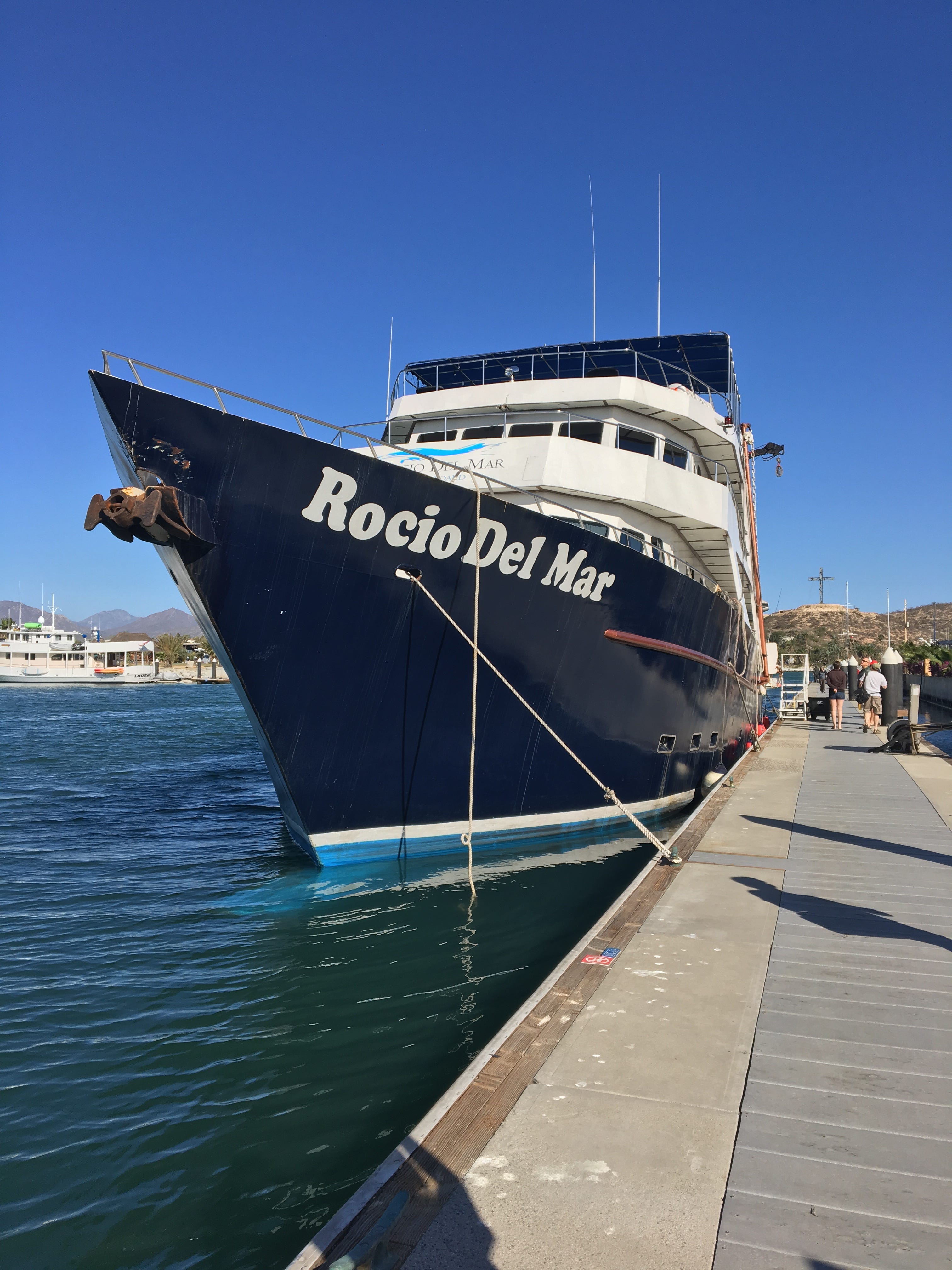
In 2018, my dad took Ian and I on a trip to the Socorros, a small archipelago about a days boat ride south of Cabo. It was my first live-a-board dive trip.
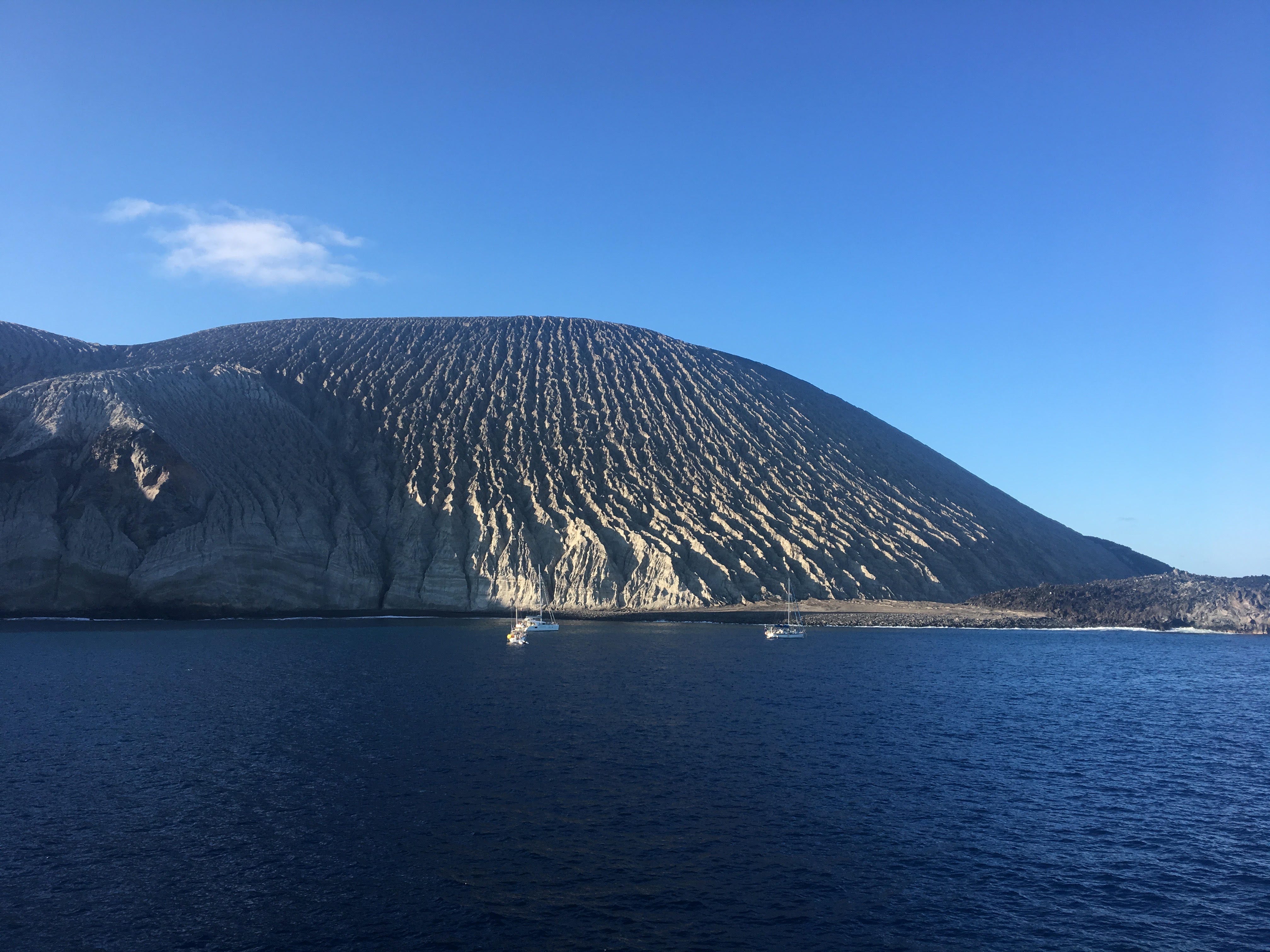
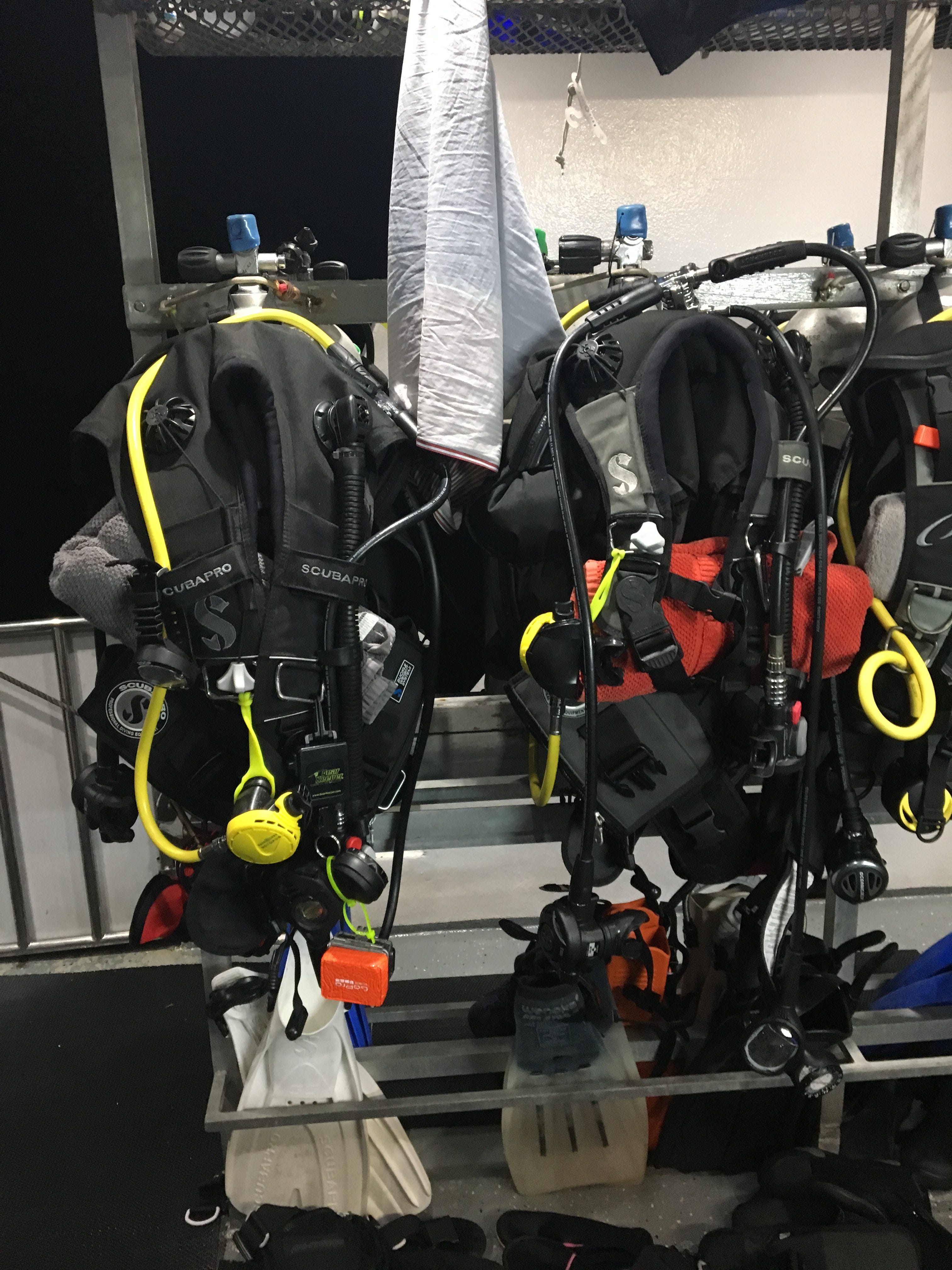
On our very first day, my group (which included my dad, Scott, and my brother, Ian) splashed first. It was about 7AM. I put on my heavy wetsuit and pitched myself over the side of the boat.
Immediately, I heard dolphins. I whipped around, turning in circles trying to spy one of the elusive creatures. It didn’t take me long to spot one, coming right for me. As I descended into the depths, so deep I couldn’t see the ocean floor, the dolphin swam right for me.
I like to think of her as a girl, but I’m no expert. It was just vibes. She looked me over before swimming up beside me. My eyes widened as the dolphin turned onto its side, showing me its belly.
So I did what any dog lover would do in this situation: I took off my gloves, reached out and began to rub the dolphin’s belly. It was smooth and soft, very similar to the underside of a ray, if you’ve ever been lucky enough to play with one of those.
Laughing into my regulator, I descended to our scheduled depth, all while rubbing the playful dolphin’s belly. A wild dolphin swam right up to me and let me rub its tummy. It lasted only a few moments, but it felt like a shared connection between me and this wild animal. It was like a greeting. “Welcome to the Socorros,” it seemed to say.
When we surfaced, the dive guide pulled me aside.
“In all my years of diving, I’ve never seen anything like that,” he told me.
I felt special. As if the ocean had chosen to show me something sacred.
I was on cloud nine and it felt like nothing could ruin my mood. But boy, was I wrong.
On our second dive of the day, I was hoping for more magic. More once-in-a-lifetime experiences to connect me even further to the wild ocean and its beautiful creatures.
We splashed and started making our way across the deep reef. The Soccorros are known for their wildlife. Huge manta rays that like to play in the bubbles emitting from scuba regulators, schools of fish and sharks.
Soon, the ocean floor ahead of me started to move as one. A school of hammerhead sharks was just in front of me, moving away from me. I’m a strong swimmer so I immediately left the other divers behind and started sprinting towards them, kicking my flippers hard.
As I got close, my lungs started to close. I was hyperventilating. The oxygen in my tank was decreasing rapidly with every labored breath, not filling my lungs. Not breathing.
It had never happened before. I suffer from panic attacks on land, so this overwhelmed feeling was all too familiar. But I was about 80 feet under the water. I couldn’t panic under the water.
No one was near me. I looked around, not seeing either Ian or my dad. I had to get to the surface. Swimming hard, I made it to 15 feet, where you’re supposed to do a safety stop and let the oxygen in your lungs normalize so you don’t get the bends.
But the panic attack wouldn’t let me go, it clung to me and it felt like if I waited, I would die. That’s when Ian found me, swimming up to meet me. I tried to signal that I was dying, a hand slashing across my throat, and he shook his head. Telling me I was fine.
I wasn’t fine. I was under the ocean. In the middle of the Pacific Ocean, and my whole body was rebelling.
My dive computer told me to wait 15 minutes before surfacing. I couldn’t. Every fiber of my being was screaming to surface. I needed to breath. I couldn’t breath.
So I did what any difficult woman in my position would do: I said “fuck it” and kicked my way to the surface. Pulling out my regulator, I sucked down air. And finally, my breathing normalized and the feeling of drowning in my own panic just disappeared.
But then the real danger started. You see, if you surface too quicky, air can get caught in your lungs and only a decompression chamber can save you. You will die if you don’t get to a chamber in short order.
Which means that if I got the bends, I was going to die. We were in the middle of the ocean, a day’s boat trip back to the mainland, and there was no decompression chamber on the boat. It would have meant a helicopter ride back to Cabo, and even that might not be quick enough.
Ian was pissed. He screamed at me with concern. How could I have been so stupid to forgo my safety stop? What if I die?
But what I wanted to know was, what happened out there?
I’m never more relaxed than when I’m under the water. It’s my happy place. All my worries go away and it’s just me and the ocean. Turtles and dolphins and sharks. Soft corals and fish darting through the soft sand.
We were diving on nitrox. Apparently, and unbeknownst to me, if you exert yourself while breathing nitrox, you can get the feeling like you can’t breath. My uncle, Neil, was also diving with us and told me all about it. All you have to do is stop moving and let it pass. If only I’d known that before I chanced a painful death to get to the surface.
Fortunately for me, the bends never came. I was just fine, but the dive guide made me sit out the next dive and I wore a dive watch to make sure I was ready in the morning.
Ian was still mad at me, going off about how worried he was and trying to override the dive guide. It would have been cute, his concern, if he wasn’t so damn loud about it.
“Stay on the boat. You’re done diving.”
Nah. No thanks. Going back down there as soon as I can.
The next dive was deep. We found the ocean floor at about 115 feet. Ian stuck to me like glue and kept pulling on my flipper if I tried to take off. Brothers never stop annoying their sisters.
With Ian attached to my hip, we swam around a huge coral outcrop and then it was time for both of us to panic.
Staring right at us, was a 15 foot tiger shark.
There is only one shark I never wanted to see in the wild, and it’s not a great white. Great whites don’t want to hurt you and once they figure out you’re not a seal, they go away.
But tiger sharks are a different story. They will hunt humans and eat them. Like, nothing for the body bag eat you.
I remember doing another thing you’re not supposed to do underwater. I held my breath. This monstrous shark was only feet away from us and it saw us. We’re sitting ducks. Ian motioned for us to go back the way we came, and slowly we inched back around the coral outcrop. As we turned, so did the shark. By some stroke of luck, it started to swim away from us.
Half a panic attack later, we surfaced safely.
The rest of the trip was magical. The reefs were nothing like the dead and dying coral that now surrounds Maui, where I first went diving. They were teeming with vibrant life. Manta rays swam around us. I got lost in a school of fish.
But the dolphin and the tiger shark have always stayed with me. The ocean is changing (thanks, climate change), but there is still so much goodness left beneath the waves. Just on the other side of crashing breakers and cresting swells, lies another universe. One I’m lucky enough to get to explore.
Just remember, if you’re on nitrox air and swimming fast, you’re not having a panic attack, it’s just the gas.
And also:
Remember, stay difficult and always question authority.
xoxo
This is such a great story!! I am so lucky that I took the time to read it. I've never been scuba diving, but if I ever get the chance to go, this will be in the back of my mind.
Following the guide's instructions versus fleeing a school of hammerhead sharks? Honestly, I'm aligned with your decision.